
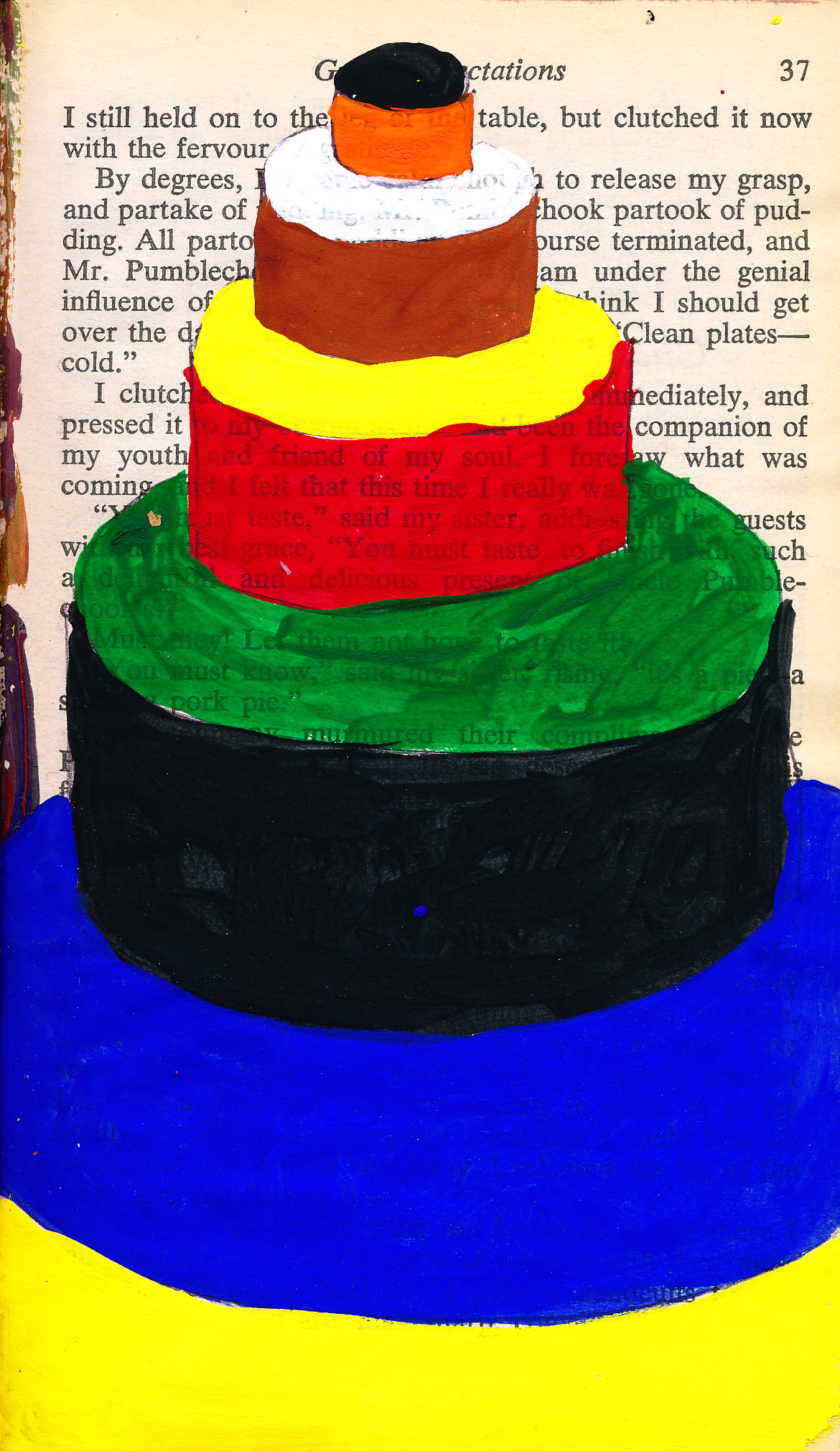
 “Porky pie” in British English means a trivial lie, like in “he told a porky pie about eating his spinach.” Somehow I thought “porky pie” meant something else.
Posts tagged Pip
Choose another tag?
Day/Page/Sketch #28
 I am a teetotaler. I really don’t know how I came to be one. I think it was a natural development. I didn’t know this had a label, though. I learned about it watching Downton Abbey. I guess everything has a label these days.
Day/Page/Sketch #27
 I have an unpleasant memory as a kid of a family member that tried to force me to eat sardines, and the more she tried, the less I wanted anything to do with them. She was, in fact, bulling me to cave to her commands. It was awful.
Day/Page/Sketch #26
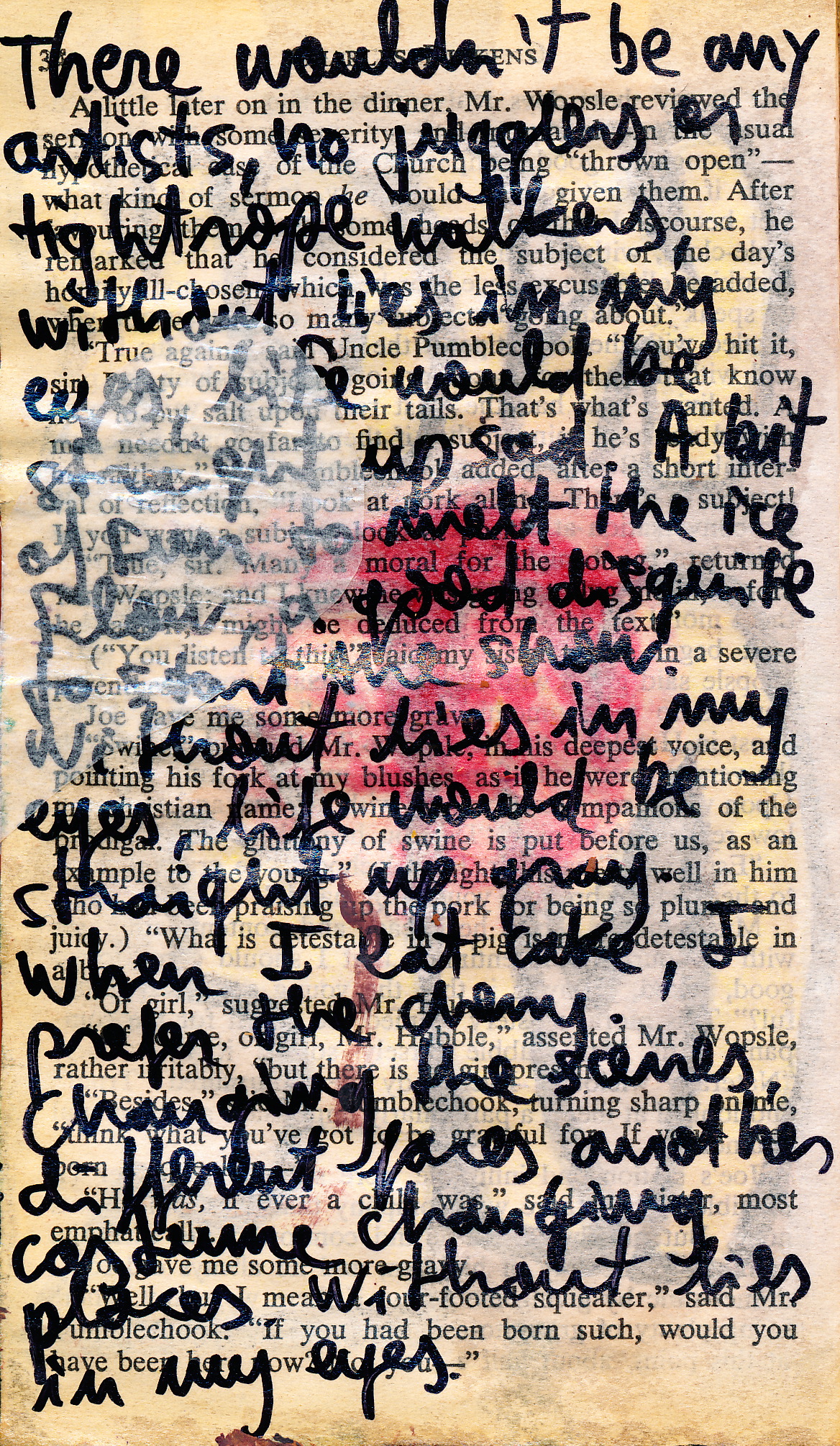 “When I eat cake, I prefer the cherry.”
Day/Page/Sketch #25
 There are many themes in the novel. One of theme is guilt. It is one of the main reasons I love the story. The hero, Pip, feels guilty about everything, all the time. He assumes culpability in each relationship, even though he’s always innocent. He takes the guilt of the world on his shoulders.
Day/Page/Sketch #24
 To read Great Expectation is to listen to it. Dickens sustains a beautiful lyrical tone in his descriptions of people and places along the entire novel. The prose is very musical. It’s like reading poetry. Mr. Hubble’s wide stance is described on with page in a hilarious yet whimsical way.
Day/Page/Sketch #23
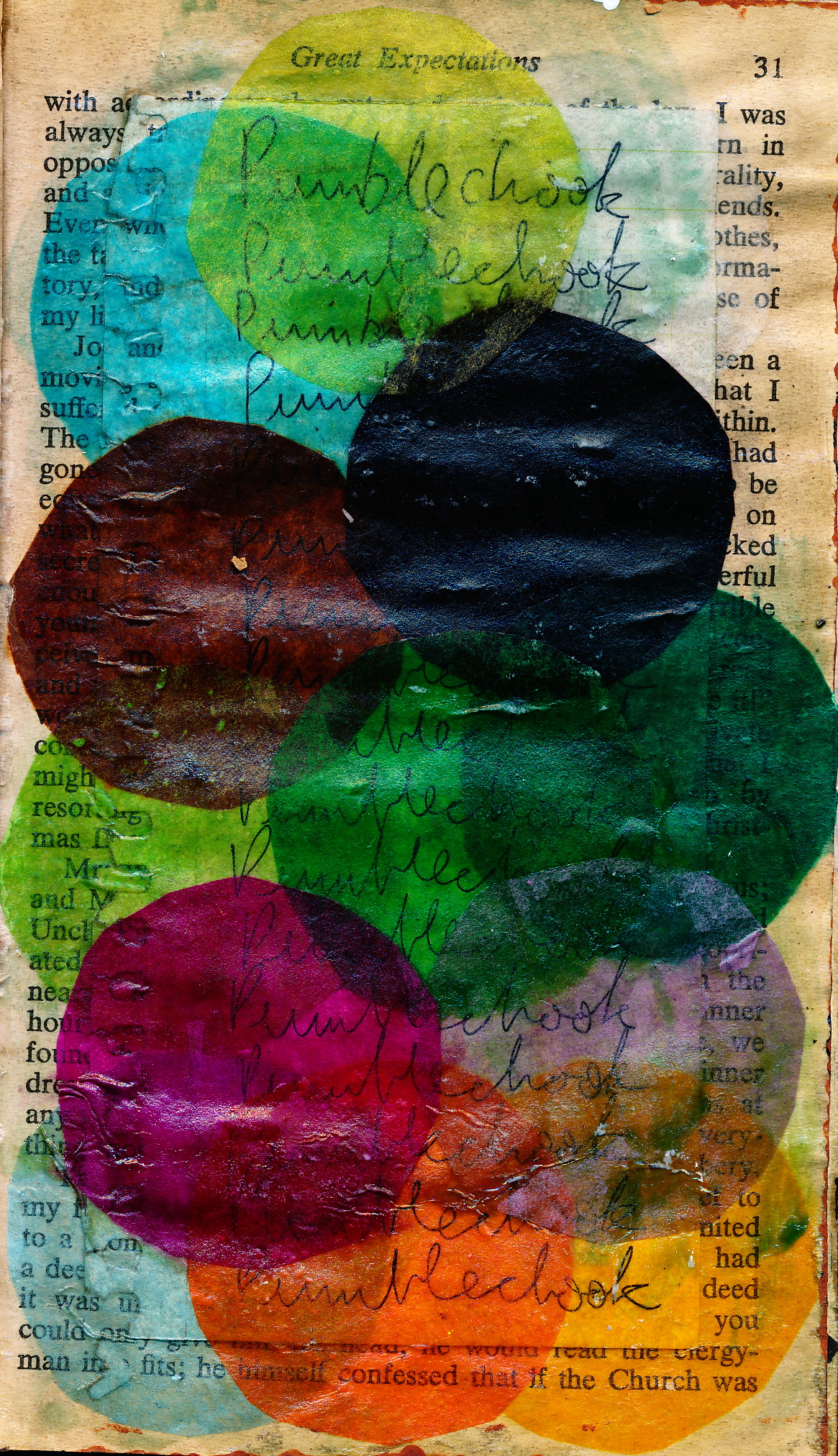 And here comes Mr. Pumblechook! This is a fun character. He is the local seedsman (he sells seeds and other stuff). He is a food hoarder, greedy, and a bully. I just love that name: Pumblechook.
Day/Page/Sketch #22
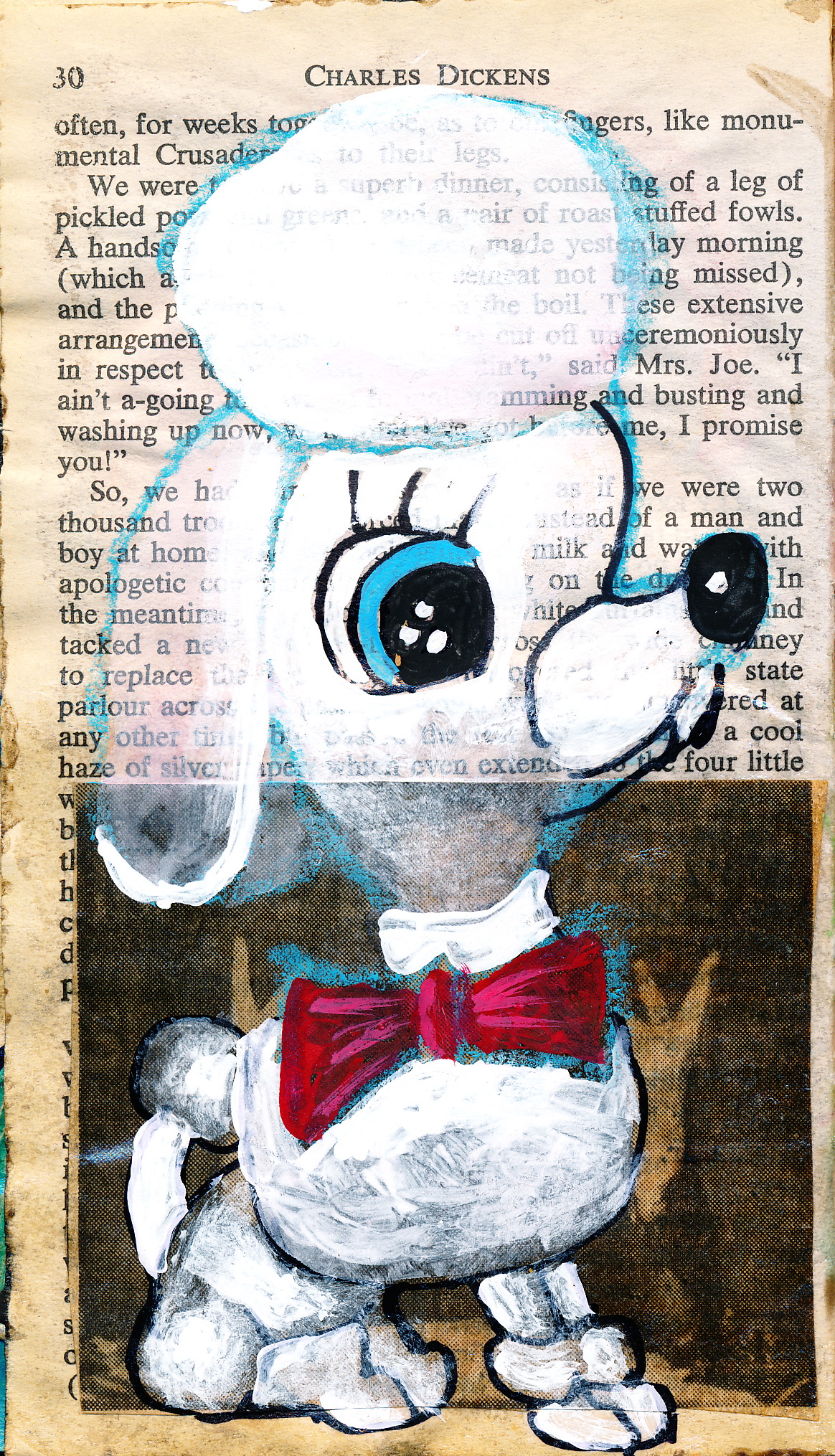 On Sunday I got a little porcelain figurine. It’s a little naked cherub-like young man pushing a wheelbarrow that has a cracked porcelain egg with embedded pink roses on it. The egg opens and the whole thing becomes a small jewelry box. It reminds me of the little white crockery poodles described on this page.
Day/Page/Sketch #21
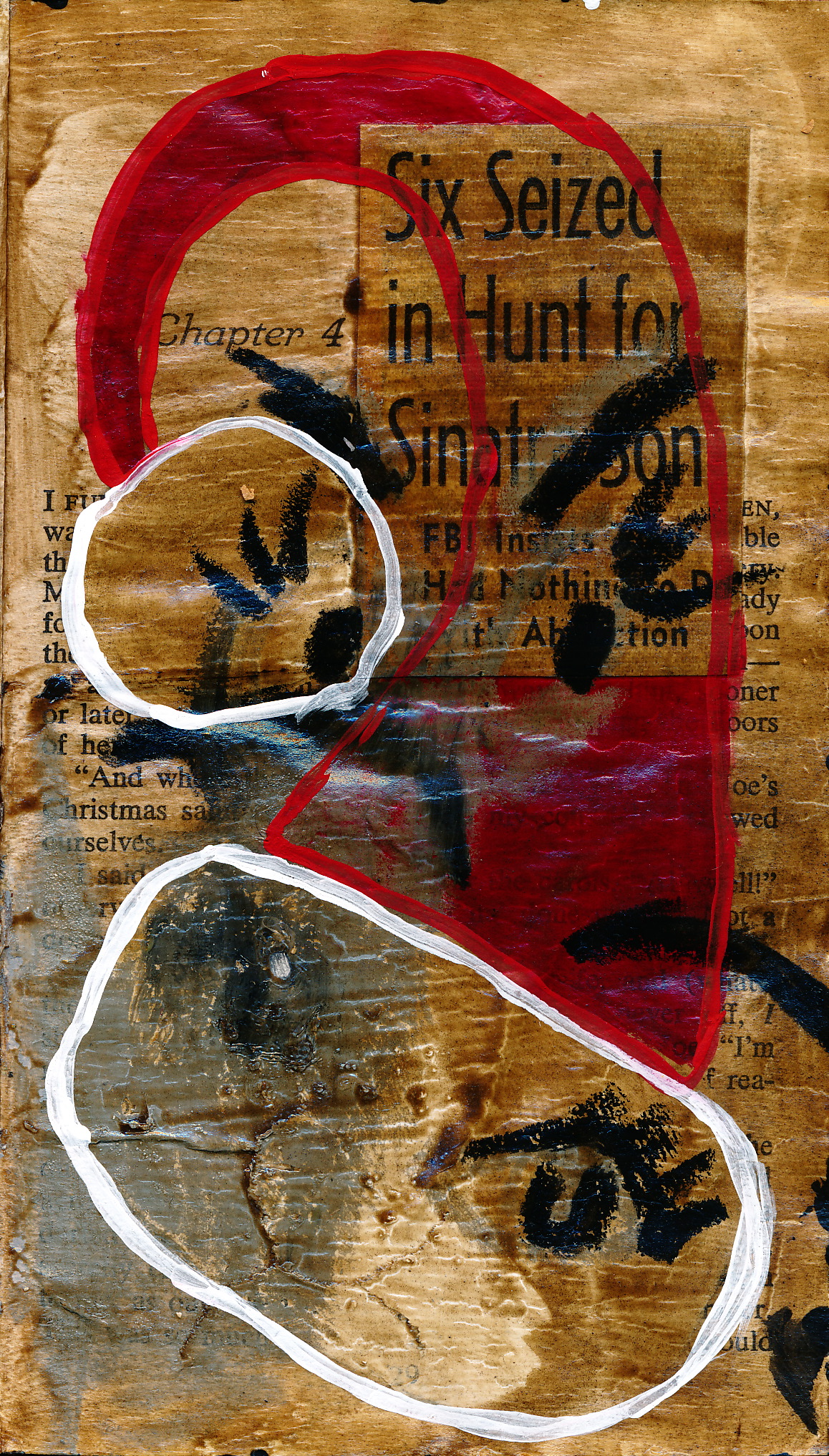 It’s the highly stressful and quickly paced Christmas scene. Dinner with 6, plus Pip. There is a reference to statues here, a trend in the 13th C. to render knights in statues with their legs crossed. Legs crossed at feet=1 Crusade campaign, crossed at knees=2 Crusades, crossed at thighs=3 Crusades. How do you cross your legs?
Day/Page/Sketch #20
 There’s nothing left to try
There’s no place left to hide
There’s no greater power
Than the power of good-bye
Day/Page/Sketch #19
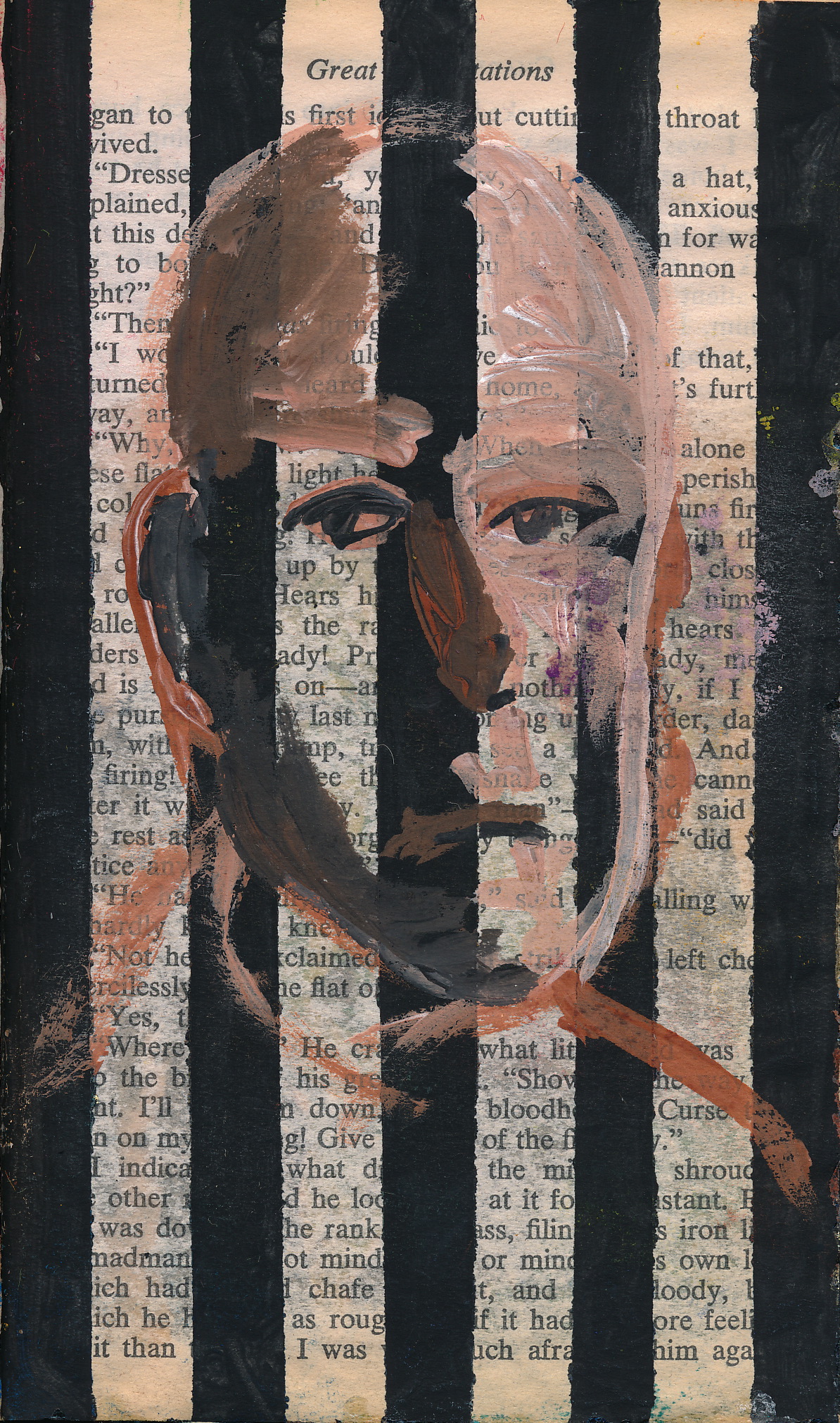 In pre-Victorian days, convicts were given numbers instead of names, to stigmatize them as nonpersons and to keep them from being identified. On the other hand, carriages and hotel rooms were entitled to names instead of digits.
Day/Page/Sketch #18
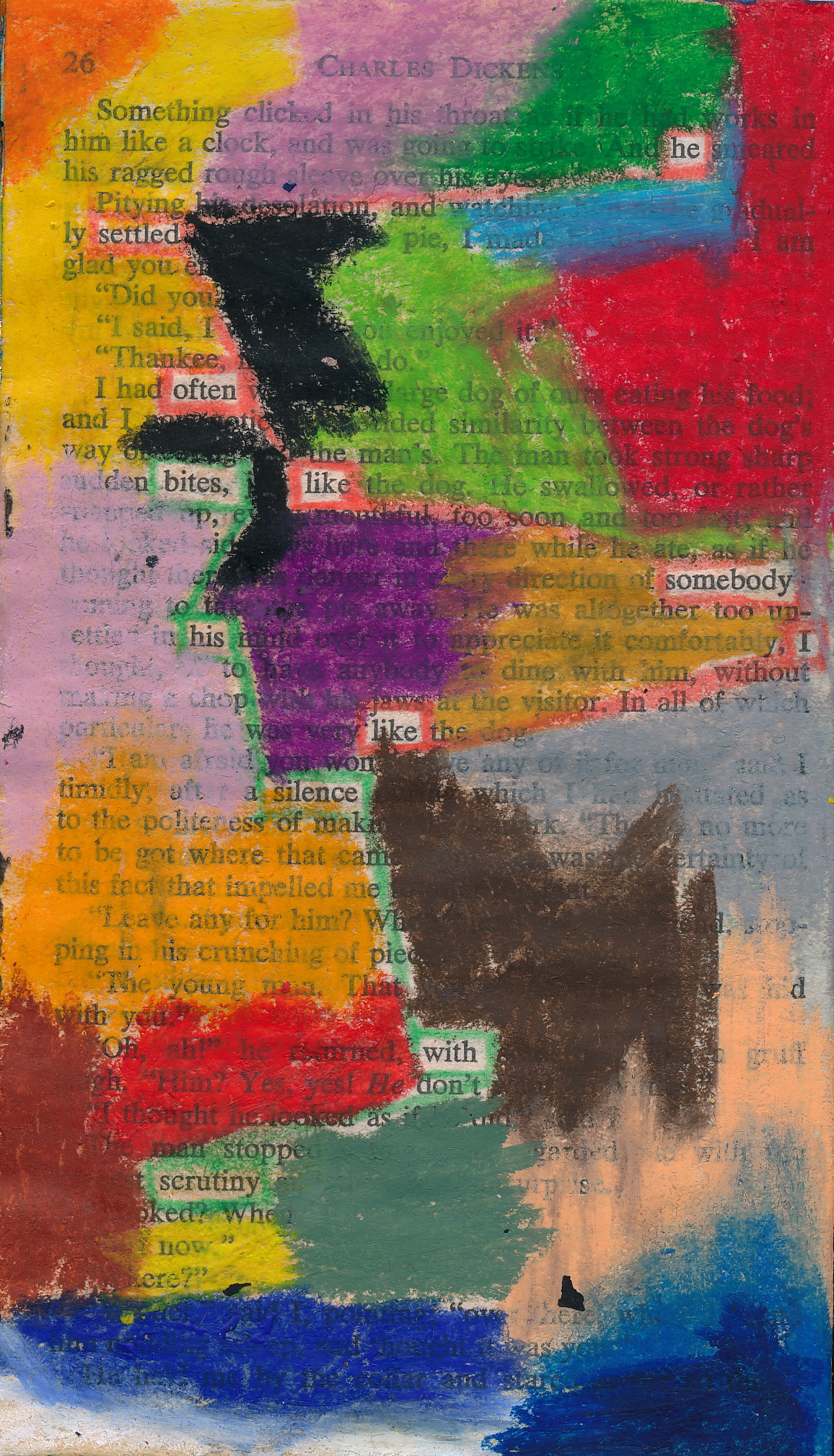 “No one, at any rate no English writer, has written better about childhood than Dickens. In spite of all the knowledge that has accumulated since, in spite of the fact that children are now comparatively sanely treated, no novelist has shown the same power of entering into the child’s point of view.” George Orwell.
Day/Page/Sketch #17
 This isn’t Paris.
This isn’t London.
This isn’t Berlin.
This isn’t Hong Kong.
This isn’t Tokyo.
Day/Page/Sketch #16
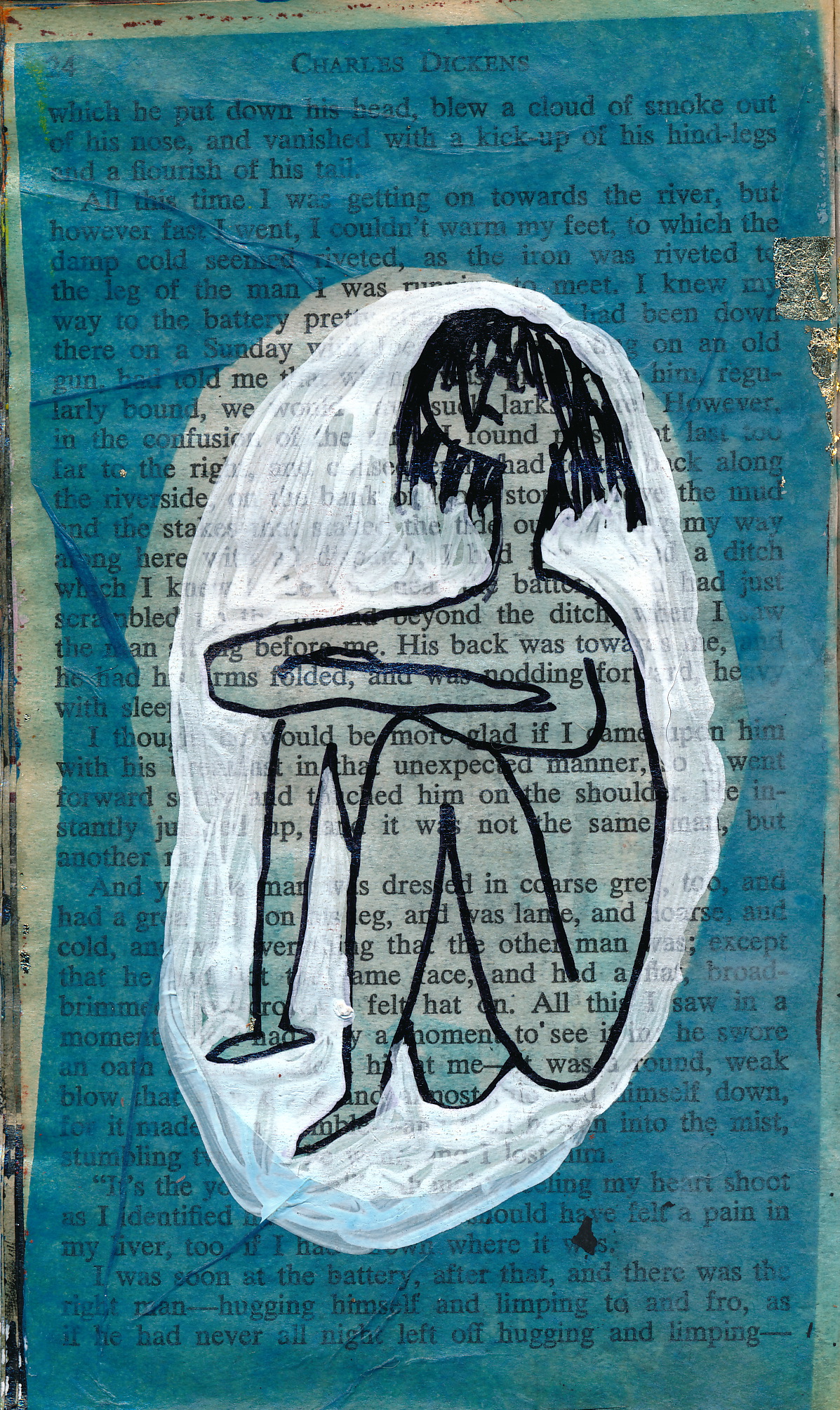 This is the first time we meet Compeyson, the man who abandons Miss Havisham on her wedding day. He is the example of everything that was wrong with London at that time. He uses social status to get him out of trouble, and uses friendship and love for his own personal gains. Have things changed that much since then?
Day/Page/Sketch #15
 The second sentence of this chapter made me gasp. I had to stop and sketch right then and there. I could not resist the endearing metaphor of the crying goblin. Period.
 The Havisham Hour