
 Asymmetry is natural.
Day/Page/Sketch #77
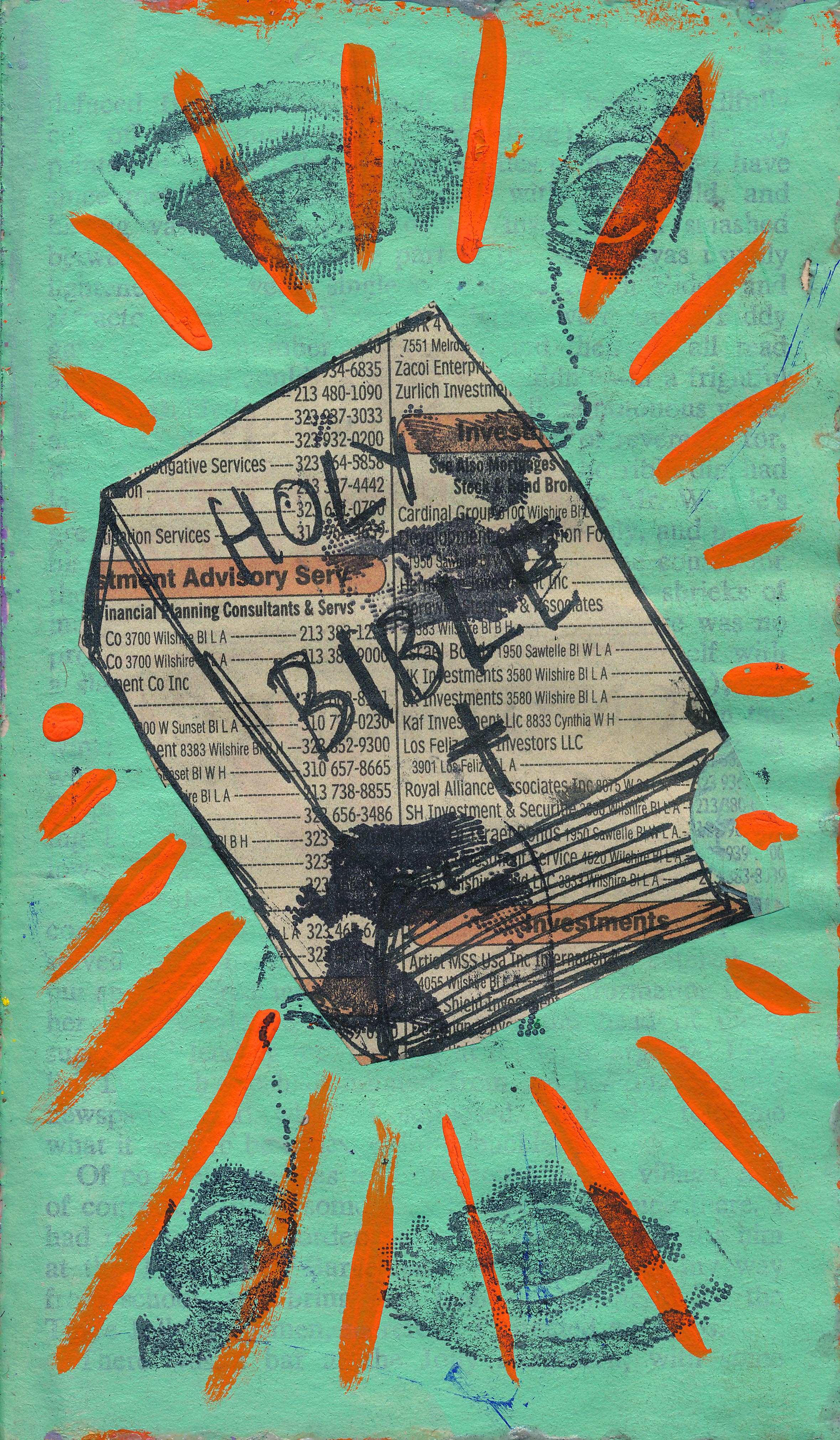 “Antiquities are history defaced, or some remnants of history which have casually escaped the shipwreck of time.” ~Francis Bacon
Day/Page/Sketch #76
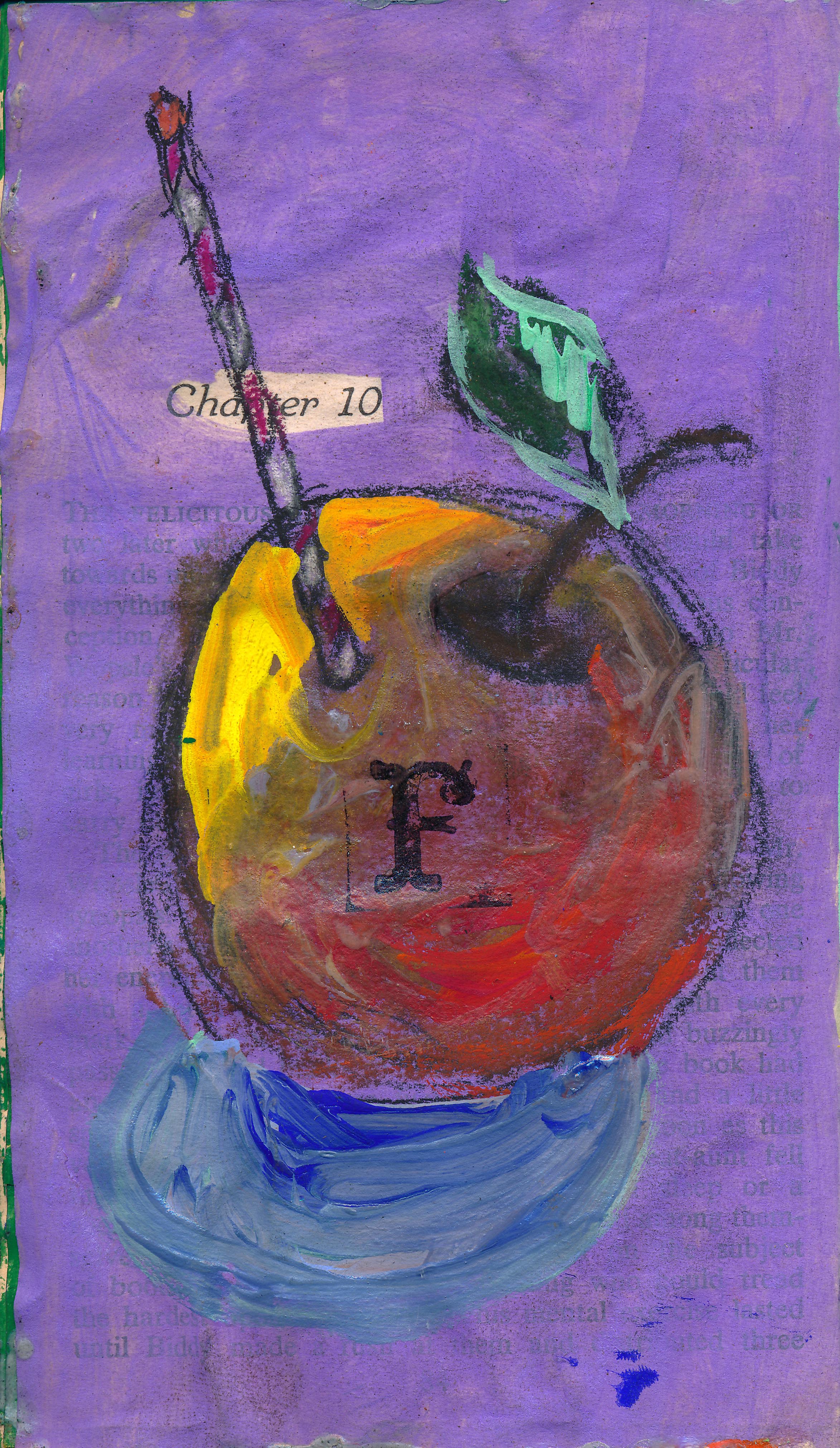 The description of the local school in this page is quite terrifying.
Day/Page/Sketch #75
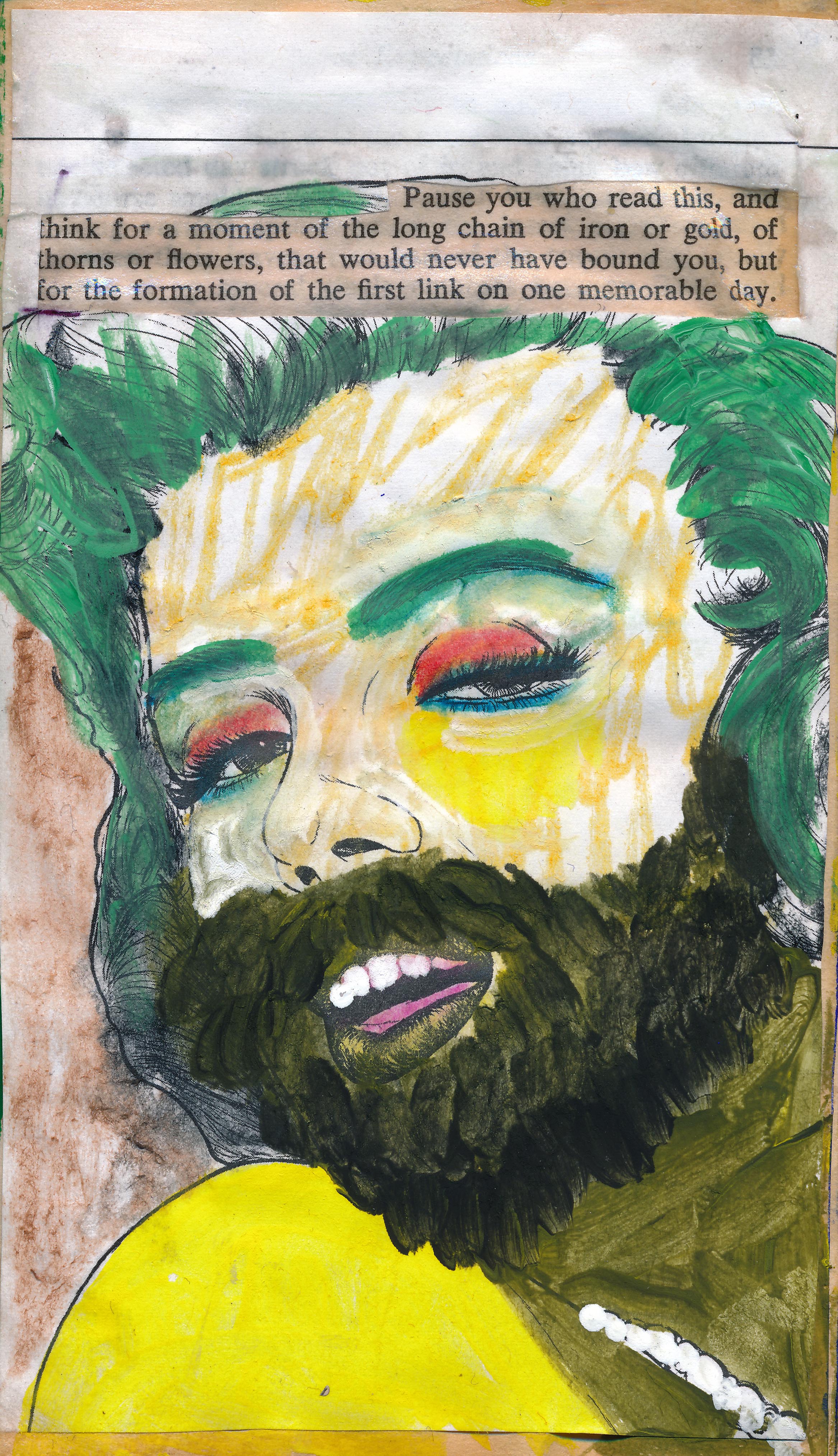 Dickens writes that there is a life chain that bounds us that is made of iron or gold, of thorns or flowers. Extraordinary moments in our lives, whether good or bad, add links to that chain.
Day/Page/Sketch #74
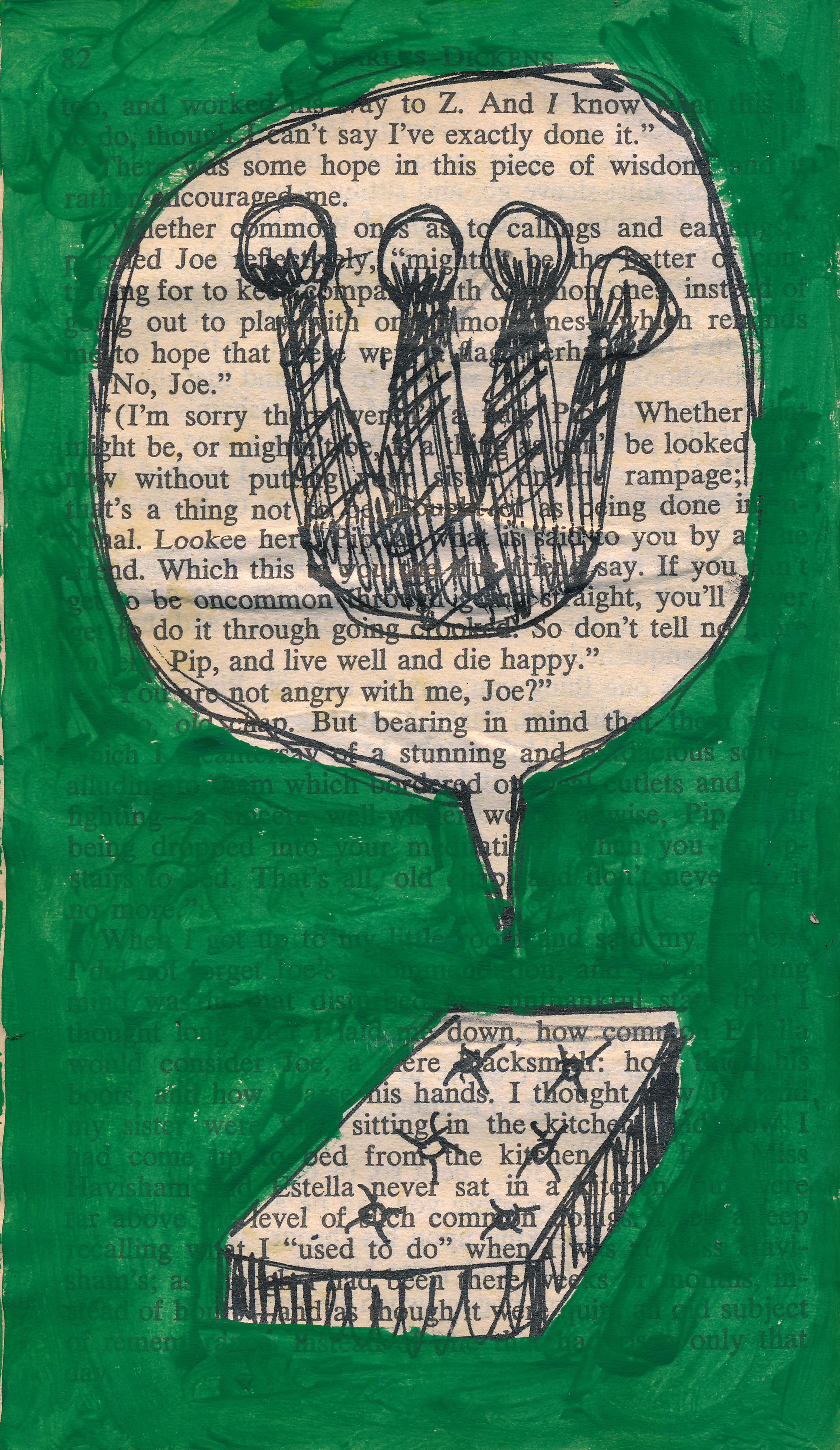 How wonderful life is while you’re in the world.
Day/Page/Sketch #73
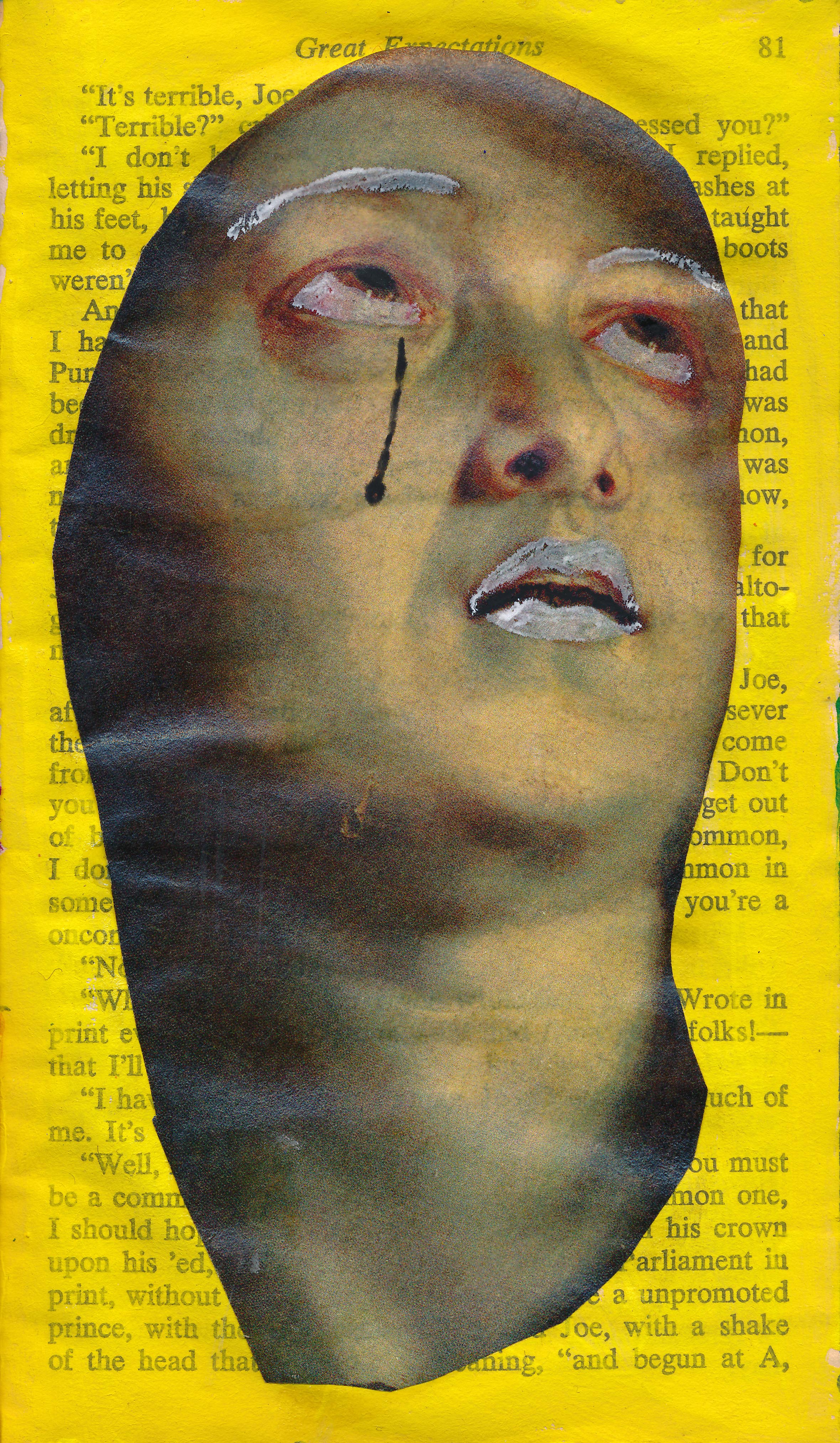 “The great unwashed”, “the plebeians” or “plebs”, “the rabble”, “riff-raff”, “the herd”, “the proles”, “peons”. Who wants to be part of that? Fine prints available at http://www.HavishamHour.com. Copyright © 2013 by Julio Panisello
Day/Page/Sketch #72
 The “Pinocchio-syndrome” appears on people who suffer from gelotophobia (fear of being laughed at). When these people perceived they are being ridiculed they stiff up and begin moving awkwardly, with wooden-like movements that resemble those of wooden puppets Fine prints available at http://www.HavishamHour.com. Copyright © 2013 by Julio Panisello
Day/Page/Sketch #71
 Flags, pills, a pistol, and jam.
Day/Page/Sketch #70
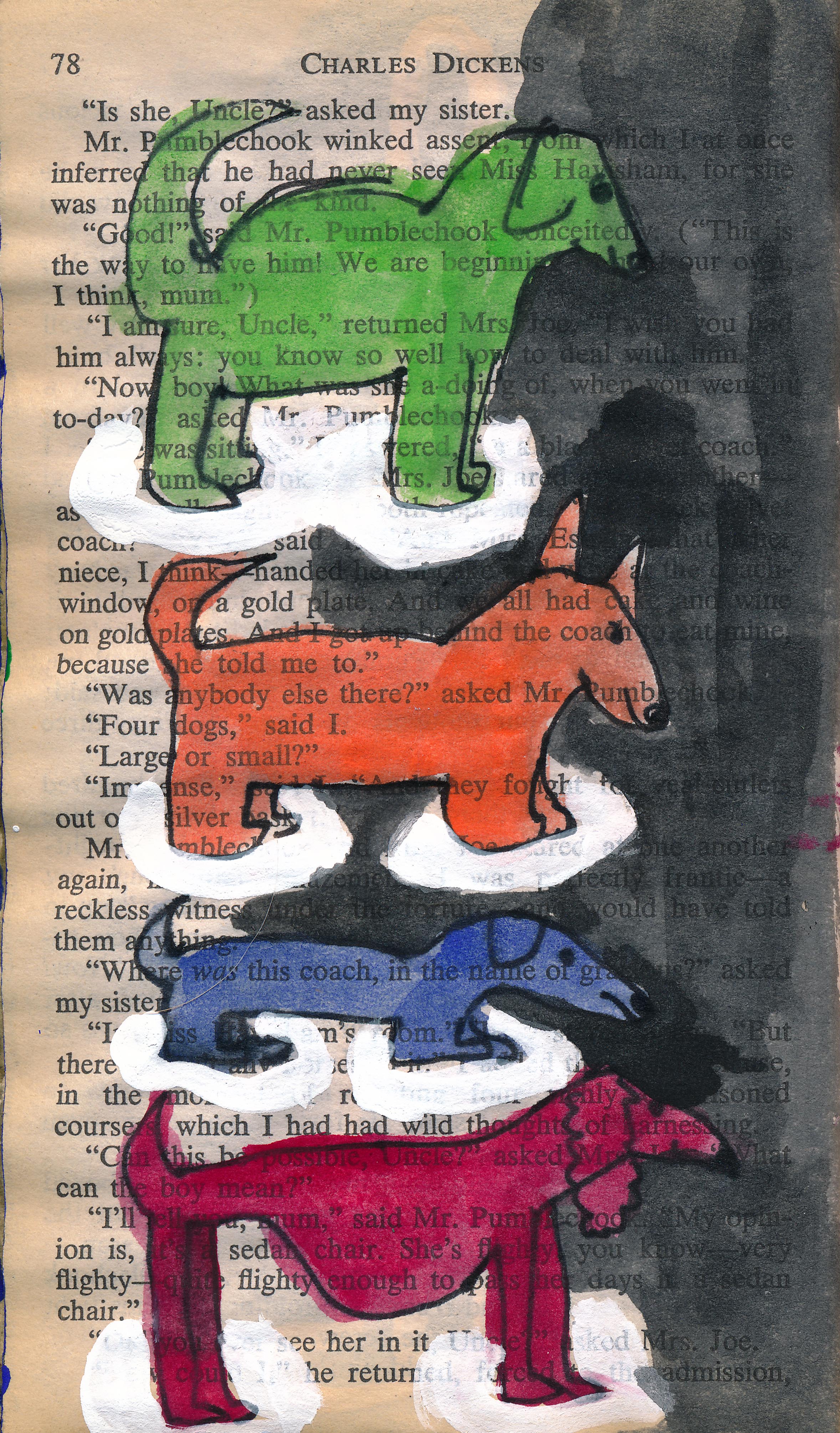 Marie Antoinette did not say “let them eat cake” when she heard that the French peasantry were starving due to a shortage of bread. Philosopher Jean-Jacques Rousseau coined the expression himself and he did not use the exact words but actually Qu’ils mangent de la brioche (“Let them eat brioche”).
Day/Page/Sketch #69
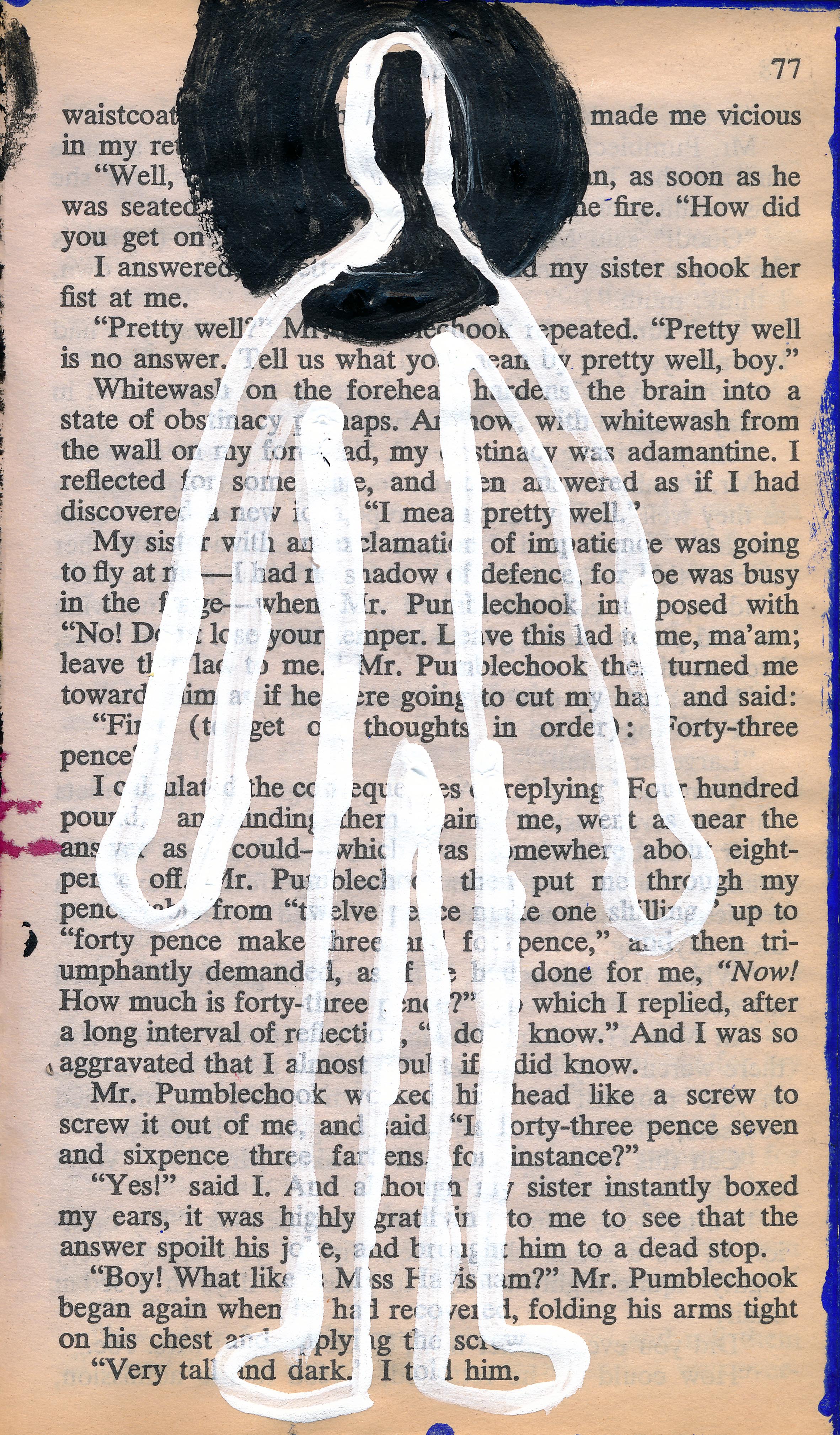 Why do we love gossip so much? Is it an instinct? In fact, it is. Gossip has been researched in terms of its evolutionary psychology origins: a means by which people can monitor cooperative reputations and so maintain widespread indirect reciprocity.
Day/Page/Sketch #68
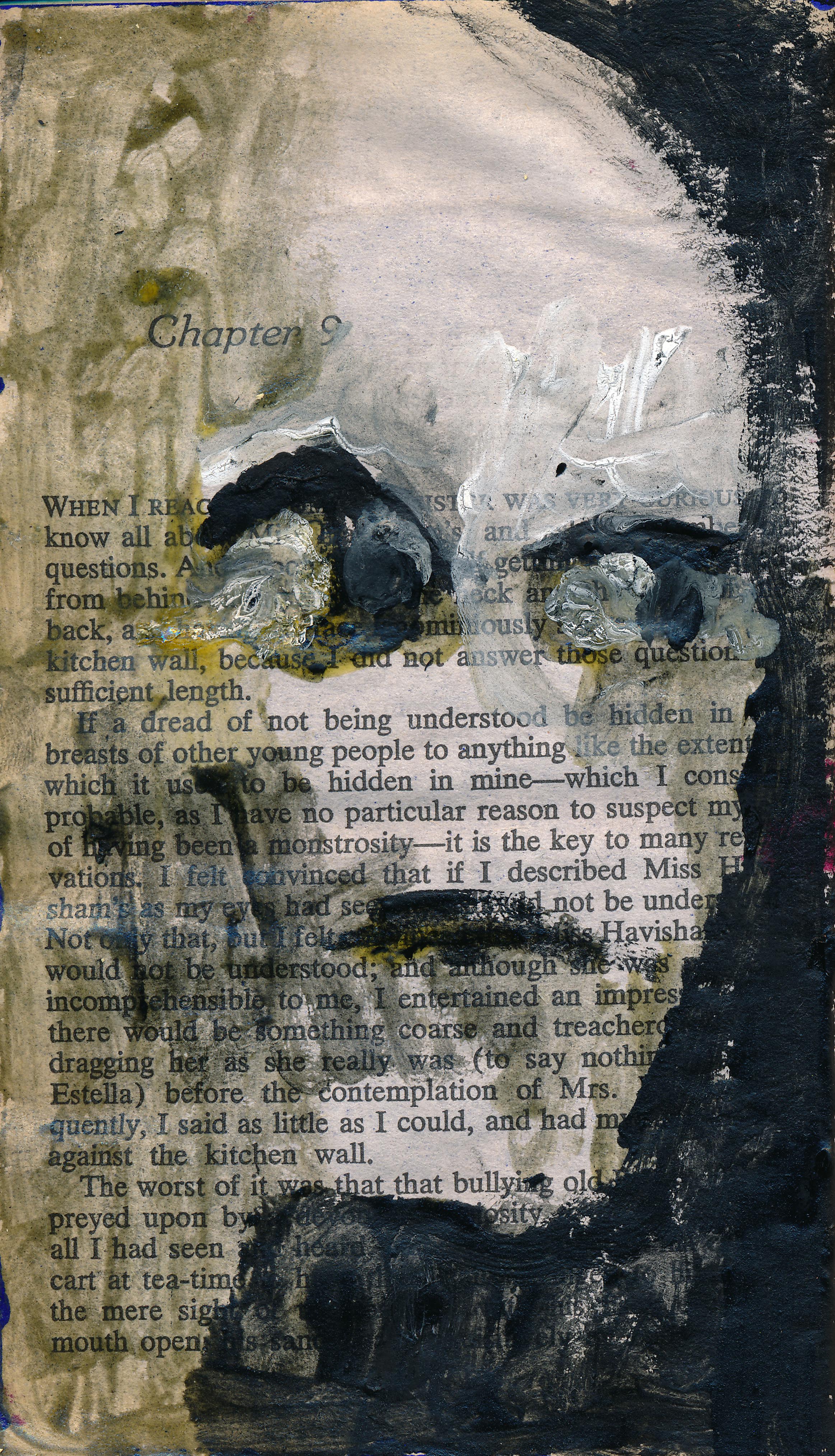 “If you want to keep a secret, you must also hide it from yourself.” ― George Orwell, 1984
Day/Page/Sketch #67
 Pip has one of the guiltiest consciences in literature.
Day/Page/Sketch #66
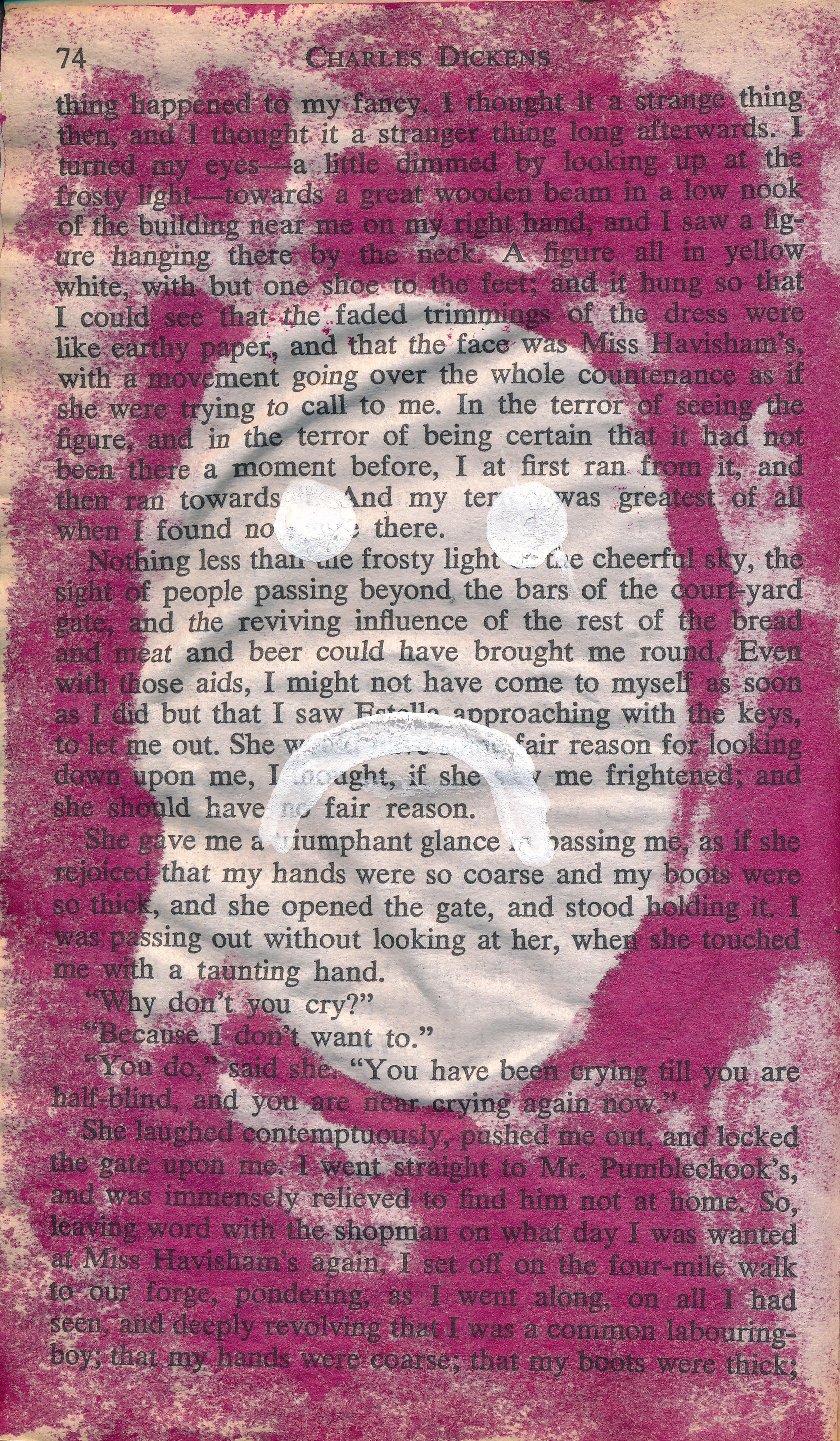 Close to closing chapter 8, our hero has one of the saddest, most miserable days of his short life, with many-many more to follow.
Day/Page/Sketch #65
 Falling in love is mainly a Western concept of moving from a feeling of neutrality towards a person to one of love. The use of the term “fall” implies that the process is in some way inevitable, uncontrollable, risky, irreversible, and that it puts the lover in a state of vulnerability, in the same way the word “fall” is used in the phrase “to fall ill” or “to fall into a trap”. The term is generally used to describe an (eventual) love that is strong.
Day/Page/Sketch #64
 “In the little world where children have their existence, there is nothing so finely perceived and so finely felt as injustice.”
 The Havisham Hour